Showing posts with label the polity. Show all posts

30 March 2026

Is academic freedom dead in Singapore?

On 22 March 2026, Malaysian activist Dr Fadiah Nadwah Fakir crossed the Malaysia-Singapore border. The trip would be mostly business: she was to deliver a guest lecture at the university where she had recently received her doctorate. To her surprise, Dr Fadiah was refused entry to Singapore and turned back to Malaysia at the Woodlands Checkpoint. She was an undesirable visitor, according to the receipts she posted on her social media accounts. In her own words, the ordeal was "extremely outrageous and distressing". Given that her candidature at the National University of Singapore was uneventful, if not model, Dr Nadiah alleged her "deportation" signals the state's disapproval of her research interests in postcolonial theory.

Safe and nonpolitical medieval students and scholars drinking and gambling,
from the Carmina Burana manuscript

Prof Khoo Ying Hooi, an international relations expert regularly consulted by Singapore's The Straits Times for regional and Malaysian political analysis, has opined that this incident is proof that Singapore actively polices the boundaries of academics to restrict their legitimate activities within education, and away from political activism and advocacy. Such a pity, the prof sniffs, as this overlap is the "common" mode of academic expression in the region.

Dr Fadiah's online theatrics and performative outrage may play to her social media audience,  but Prof Khoo's quiet piece presents a challenge that Home Affairs minister K Shanmugam cannot swat away easily: Was Singapore's action not just heavyhanded, but detrimental to academic freedom? Did striking Dr Fadiah also inadvertently hurt academic freedom and academic independence or autonomy, on which any functional democracy depends?

23 January 2026

Did the Workers Party respond correctly to PM Wong's challenge?

It's been a long road, getting there to here. In 2021, Raeesah Khan (WP-Sengkang) attempted to besmirch the reputation of the Singapore Police Force in a speech to parliament. She falsely claimed she witnessed the police traumatise a victim of sexual assault. As it turned out, her party leader Pritam Singh found out it was a lie, allowed her to continue the lie for 3 months until she recanted it, then himself lied to the Committee of Privileges when it investigated her conduct, and was found out and referred to the criminal courts.

Pritam Singh was found guilty of lying and convicted in court, and his conviction conclusively upheld after appeal. And now the chickens are beginning to come to roost: Mr Singh was censured in a parliamentary motion of dishonorouable conduct unbecoming of a Member of Parliament and unsuitable to be the Leader of the Opposition.

Singapore prime minister Lawrence Wong quickly withdrew the privileges afforded to Mr Singh as the Leader of the opposition and invited the Workers Party to nominate someone else to the position. WP leadership mulled on the decision for nearly a week before rejecting the proposal entirely. Did it make the right decision?

King John surrendering his crown to the Pope's representative

26 March 2025

Was Pritam Singh crying wolf? Modelling the 2025 Singapore General Election

It must've been an annus horribilis for the Wokers' Party for its leader Pritam Singh to muse publicly that his party could face a wipeout in the imminent 2025 general election. Was it the crushing defeat of the government-appointed Leader of the Opposition in the State Court, on charges of lying under oath to a parliamentary committee and a stinging rebuke by the judge? Or its second ever sex scandal? But then, what would we make of the completely opposite forecast by foreign observers who say this is the most competitive general election of Singapore's history, where the opposition is poised for game-changing victories that will surely transform the political landscape?

Only one of these two predictions can be true, but which? Is Pritam Singh voicing a rare warning to his partisans, or is this an attempt to rally his troops by reusing the boogeyman from the previous election?

Pritam Singh prefers to play a game of electronic football with Death!

10 May 2024

What will happen when Lawrence Wong becomes Singapore's next prime minister?

Pencil in the date on your calendar (or calendar app)! Barring any unforeseen circumstances like a natural disaster, foreign invasion, or catastrohpic illness, Lee Hsien Loong will finally step down and make way for a capable, able-bodied, and willing successor. Lawrence Wong will indeed become Singapore's 4th prime minister on 15 May 2024.

Yet the emerging details of the handover are of concern and raise questions about the governing capacity of the Lawrence Wong premiership. When Mr Wong takes over, he does so under the mentorship of Lee, and without any immediate change in policy or a major reshuffle of the cabinet.

Wong's sound and reassuring reasoning that Singapore's "system works on the basis of continuity and progressive change" still begs the question: Why should the nation wait till after the next general election to find out his personal vision and roadmap for the country, his policy direction, and the leadership renewal that will accompany these changes in the cabinet? Even the alleged "seatwarmer" Goh Chok Tong promised a kinder, gentler, more consultative Singapore before his maiden election, clearly communicating a clear difference in style, vision, and mode of governance.

28 August 2023

Choose your own president

It is the morning of 1 September 2023. Having learned your lesson in the pandemic general election, you wake up early today to beat the queues at the polling station. Because voting is compulsory, you cast your vote, then head back to laze the rest of the public holiday away.

Even though voting is secret, what you overhear in public, what you read online, and what you and your friends discuss over the course of the day jump out at you: you have chosen the same candidate as a majority of the electorate.

Put this way, it is a statistically unremarkable event. But what if instead, there was a secret in the voting booth that aligned the majority of voters to your choice?

24 August 2023

Is Singapore's Elected Presidency too broken to be fixed?

How broken is Singapore's Elected Presidency?

Once upon a time, Singapore had a president who was its ceremonial head of state.  Like all Commonwealth heads of states, this president presided at annual military parades, gave the President's Speech to open each parliament session, gave assent to legislative bills, approved the national budget, pardoned prisoners, and signed off on the appointment of key positions in the civil service - all on the advice of the government.

Then in 1991 after 5 years of debate in parliament, Singapore had an "elected president". Is he a "check on a rogue government" and "guardian of the reserves"? Depending on who you asked and when you asked, the purview and powers of this president has dramatically waned over the years. The image below is an attempt to summarise the public communications of Singapore's leaders on the elected president over the years, and the growing public disquiet they have engendered.


14 February 2022

When will it be safe to support the Workers' Party again?

On 10 February 2022, the Committee of Privileges presented its official report on Ms Raeesah's Khan's lies to the Singapore Parliament.

Here are some of the salient points from the report.

For all intents and purposes, the fat lady has sung

09 February 2022

Will the PAP pay a political price for the committee of privileges?

Politics is a funny business. Both sides of the political divide in Singapore can agree on several immutable facts: Worker’s Party MP Raeesah Khan told several lies in Parliament for months, eventually admitted, apologised, and resigned for lying, a complaint for breach of parliamentary privilege was filed, and a committee of privileges convened to investigate the matter.

According to certain online commentators, given the same facts, it is the People’s Action Party that must pay a political price because the committee of privileges allowed Khan to implicate the leaders of WP (notably Leader of the Opposition Pritam Singh and Opposition Whip Sylvia Lim) for their possible role in abetting her lies, and then to investigate these allegations. When did they know of the lie? What did they say to Khan over the course of 3 months? Why did they keep silent for 3 months? Why, the PAP will pay for the committee going in this direction, not the WP!

19 December 2021

Should Singaporeans trust the parliamentary Committee of Privileges?

Every night for the past two weeks, Singaporeans watched as the Committee of Privileges investigated Raeesah Khan, formerly MP for Sengkang GRC and leading members of her former political party, for lying in Parliament.

Is the Committee of Privileges politically motivated? Is this investigation a witch hunt and a prelude to "fix the opposition"?

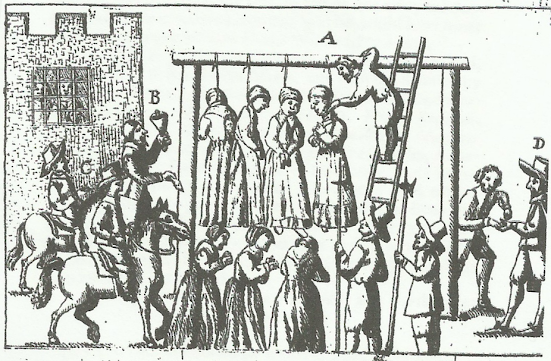
Illustration of the Newcastle witch hunt of 1650 from Ralph Gardiner's account in 1655

28 August 2020

You chose Tan Kin Lian!


In polling booths across Singapore, Tan Kin Lian is chosen by a slim margin as Singapore's 5th Elected President. Few suspect it, but hardcore opposition supporters do not form the largest portion of Tan's winning coalition. Tan wins the day not on his own merit. Instead, enough voters across Singapore's political spectrum have grown weary of the endless machinations of the PAP to redefine the elected presidency. After 30 years of PAP's tomfoolery, enough voters realised that the presidency has become a clown show and the appropriate way to reward the PAP is to elect the biggest clown they can find on the ballot sheet.

You chose Ng Kok Song!

In polling booths across Singapore, Ng Kok Song is chosen by a slim majority of the votes as Singapore's 5th Elected President. Few suspected it, but he has a winning coalition that consists of pro-establishment types who nevertheless do not want an unpopular PAP to monopolise power over the presidency, and pro-opposition types who nevertheless cannot hold their noses to put the X next to Tan Kin Lian's name.

It is not being an "independent" that elevates him to presidency, but being a blank slate. Having expressed no political views and being a social non-entity with zero contributions to social and civic life ironically make him palatable enough to win the highest vote count.

You chose Tharman Shanmugaratnam!

In polling booths across Singapore, Tharman Shanmugaratnam is chosen with more than 50% of the votes as Singapore's 5th Elected President. Few suspect it, but voters have noticed that his opponents are actively worse choices. Tan is an eccentric boomer who keeps stuffing his foot in his mouth while resting on his dusty 20-year-old laurels as NTUC Income chief. Ng has managed, outside his long professional career as a fund manager and entrepreneur, to be a social non-entity with next to zero contributions to Singapore's social or civic life. They reasoned that they would rather take a chance with Tharman.

In the months to come, President Tharman attempts to heal the wounds of Singapore's troubled presidency, and then put his own spin on the office. 

03 July 2020

Modelling the 2020 Singapore General Election


Will this be a game of chess, or a game of twister?
Choose wisely when you play with Death!

When its prime minister Lee Hsien Loong called for parliament to be dissolved on 23 June 2020 for snap polls, Singapore joined an exclusive club of nations holding national elections during the global pandemic. South Korea's ruling Minjoo Party won its snap polls easily and even extended its majority in parliament. Taiwan's Tsai Ing-wen was handily reelected in its presidential polls. Will Singapore's People's Action Party do the same? Is it checkmate and a total wipeout for Singapore's opposition, which held just 6 seats out of 89 after the 2015 election?

20 August 2019

What is the rational solution to the Hong Kong protests?


Thanks to Singapore's authoritarian and paternalistic leadership, its activists have never had a chance to commandeer a successful negotiation with the government. Deprived of such experience and pushed towards the "oppose, protest, and railblock" model of activism, these civil society actors fail to recognise that skilful negotiation is part and parcel of everyday social processes within a polity to moderate policy given disparate and competing preferences on the ground.

From the point of view of Singapore's activists, the Hong Kong protests can only end in a "Springtime for Xi Jinping" (aka the coup from above) or a "Hong Kong Spring" (aka the revolution from below), both of which fit into their experience of activism as futile but dramatic political theatre but are in fact the least likely outcomes in even semi-democratic, moderately liberal, wealthy polities like Hong Kong. Little is expected from Singapore's activists aside from virtuous signalling that they "stand in solidarity" with Hong Kong and will shed the requisite amount of tears of appropriate joy or sorrow when the time comes. But what happens when we approach the protests rationally?

15 May 2019

How will Singapore's leaders use its new Fake News law?

On 8 May 2019, the Singapore parliament passed the Protection from Online Falsehoods and Manipulations bill into law. As of the time of the publication of this blog post, either the president has not given her assent or the minister has not made the decision to commence the law in the Gazette.

We noted earlier that even though the ruling People's Action Party has a supermajority which ensures the passage of any bill proposed by the cabinet, the key issues have always been whether the cabinet can gain the confidence of stakeholders and industry interests in the bill, whether there will be corrections or clarifications of the more unsettling portions of the bill, and whether the bill passed would satisfy that audience.

Power is power, or is it? The power to pass laws is absolute power, or is it?
A snapshot of attitudes, comments, and actions from stakeholders and members of the industry in the run-up to the debate suggest that clarifications at the very least had to be made and made convincingly, especially if no corrections or U-turns could be afforded by the cabinet on the bill.

So did the parliamentary debate provide suitable clarification to gain the confidence of industry interests and stakeholders?

12 September 2018

Is Dr Thum Ping Tjin a traitor to Singapore?

Almost two weeks ago, Singapore historian Dr Thum Ping Tjin, together with Sonny Liew, Kirsten Han, and Jolovan Wham, met with Malaysian prime minister Dr Mahathir in Kuala Lumpur. His Facebook photo and description of the meeting and subsequent exchanges with law minister K Shanmugam and MP Seah Kian Peng have resulted in very serious accusations that the good Doctor is a traitor.

Did Dr Thum invite Mahathir to interfere in Singapore's domestic politics, as minister Shanmugam alleged? Does Dr Thum wish ill on Singapore, as Mr Seah suggested? Does Dr Thum have an agenda, however nostalgic, misguided, or delusional, for a Malayan union? Is this treason? Or are the minister and MP irresponsible and inflammatory, as Thum accuses?

A typical election pamphlet in Victorian England

24 March 2018

5 basic principles you can learn at a select committee hearing

On 22 March 2018, select committee for deliberate online falsehoods member Minister Shanmugam subjected Facebook representative Simon Milner to a long and tough question session. That is a fact. Incontrovertible.

It is possible to track how the domestic and international news reportage, as well as general commentary by various interest groups is playing out. Several narratives have arisen from that one incontrovertible fact. Each narrative is indicative of the position, positioning, and position-taking of its respective author.

Did Facebook prevaricate? Did Milner discombobulate? Did Facebook get what it deserved? Was a normally unaccountable Facebook taken to task? Was Facebook treated unfairly? Was Shanmugam an inquisitorial bully? A competent publicist for the Singapore government might have even spun a narrative about Shanmugam striking a blow for consumer rights worldwide.

Don't forget advertising and PR agencies!

20 March 2018

Are Singapore's fake news public hearings a waste of time?

Singapore's Select Committee on Deliberate Online Falsehoods have begun hearing testimonies from the public.

It is tempting to dismiss the proceedings as a prelude to new laws against free speech online. But it is more profitable to suss out the complexities, competing agendas, inconsistencies, and blind spots that arise from select committee hearings even as the committee balances its fact-finding function with its practical role in parliamentary decision-making and consensus-building.


In other words, ignoring a select committee's public hearings is an indicator of political illiteracy.

25 January 2018

Are Fake News laws inevitable in Singapore?

Civil society activists in Singapore will no doubt claim that legislation against fake news is inevitable and imminent, that it is part of the authoritarian government's general clampdown on the online media.

In terms of Westminster procedure, Singapore's inevitable march towards fake news laws is in its infancy. Cabinet signals interest and concern on an issue in a Green Paper, a Select Committee is convened. That's where we are at now. Public hearings need to be convened, a committee report drafted and presented in parliament, the cabinet's response to its recommendations and findings presented in another parliament session, a White Paper drafted by the cabinet, potentially more public hearings convened for feedback, the White Paper debated in parliament, a Bill drafted and read twice before passing into law. That is how much more needs to be done.

Yet given how Singapore puts its own spin on Westminster procedure, our hysterical activists might well be right.