Showing posts with label public policy. Show all posts

05 December 2025

Did PM Lawrence Wong poke the dragon?

On 19 November 2025 at the Bloomberg New Economy Forum gala dinner in Singapore, Lawrence Wong was asked to analyse, from the view of Asia, the contentious and intense China-US rivalry and its spillovers in the region, with "this spat going on between Japan and China". Singapore's prime minister called for stability and de-escalation. Mr Wong even called for a normalisation of ties between Japan and China. His subtext: China's policy of nurturing historical grievances to fuel jingoist nationalism must seem bewildering and abnormal to the peoples living in Southeast Asian nations, which experienced a long Cold War in succession to WW2. (Or indeed, anyone living in the European Union.)

Right on cue, outraged online mobs in China were whipped into a frenzy by one Peking loyalist and online influencer Yu Pun-hoi in Hongkong and his ultra-nationalist collaborators in Shanghai. And then, panic and concern from various segments of Singaporeans who now feel Wong should not have poked the dragon and sparked off a bonfire.

Was Lawrence Wong unnecessarily provocative? How much of this controversy is his fault? Or was the online mob just the latest chapter in a long-running but increasingly ineffective Chinese influence campaign to decouple Singapore from the American security apparatus in the Asia Pacific? Or is this a sign that Singapore has a vocal homegrown faction that stands for realignment and Sincization?

Mob with pitchforks and torches, from Young Frankenstein.
"A riot is an ugly thing. And I think it's just about time that we had one!"

05 August 2024

Did the Straits Times just paint a bullseye on Wang Quancheng?

Can you smell it in the air? This year in Singapore, the Hungry Ghost month begins on 4 August. For a entire lunar month, practitioners of Chinese folk religion or Shenism will burn gigantic sticks of incense, joss paper, and offerings to the dead, sparking the perenial complaints of air pollution by the public and admonitions for multiculturalist tolerance by political leaders. As for more pleasant sights and sounds, visitors to Singapore can look forward to pentatonic Chinese wayangs and racuous charity auctions in the heartlands, organised by temples, clan associations, and neighbourhood business associations.

No wonder then that the Qixi festival has been recently revived by state fiat? And hence, the Straits Times report on Singapore's revival of the Qixi festival, with the newspaper's usual nation-building focus. But wait, there's something wrong in the ST story: a lengthly digression featuring a president of a Chinese association that isn't even an organiser or partner of this year's festival, but is a mere participant, among a field of scores of clan associations? It's as if the Straits Times is dog whistling to readers who have been trained over decades to read between the lines of SPH journalese: Pay attention to Wang Quancheng of the Hua Yuan Association! Don't you want to find out more about him?

"William Tell and The Apple-shoot woodcut", from the printed edition Of Jakob Ruff's version Of The Canton Of Uri folk play "Von Dem Frommen Und Ersten Eydgnossen Wilhelm Thellen",
acted by the townspeople Of Zurich, Switzerland, on New Year's Day, 1545.

10 May 2024

What will happen when Lawrence Wong becomes Singapore's next prime minister?

Pencil in the date on your calendar (or calendar app)! Barring any unforeseen circumstances like a natural disaster, foreign invasion, or catastrohpic illness, Lee Hsien Loong will finally step down and make way for a capable, able-bodied, and willing successor. Lawrence Wong will indeed become Singapore's 4th prime minister on 15 May 2024.

Yet the emerging details of the handover are of concern and raise questions about the governing capacity of the Lawrence Wong premiership. When Mr Wong takes over, he does so under the mentorship of Lee, and without any immediate change in policy or a major reshuffle of the cabinet.

Wong's sound and reassuring reasoning that Singapore's "system works on the basis of continuity and progressive change" still begs the question: Why should the nation wait till after the next general election to find out his personal vision and roadmap for the country, his policy direction, and the leadership renewal that will accompany these changes in the cabinet? Even the alleged "seatwarmer" Goh Chok Tong promised a kinder, gentler, more consultative Singapore before his maiden election, clearly communicating a clear difference in style, vision, and mode of governance.

09 February 2022

Will the PAP pay a political price for the committee of privileges?

Politics is a funny business. Both sides of the political divide in Singapore can agree on several immutable facts: Worker’s Party MP Raeesah Khan told several lies in Parliament for months, eventually admitted, apologised, and resigned for lying, a complaint for breach of parliamentary privilege was filed, and a committee of privileges convened to investigate the matter.

According to certain online commentators, given the same facts, it is the People’s Action Party that must pay a political price because the committee of privileges allowed Khan to implicate the leaders of WP (notably Leader of the Opposition Pritam Singh and Opposition Whip Sylvia Lim) for their possible role in abetting her lies, and then to investigate these allegations. When did they know of the lie? What did they say to Khan over the course of 3 months? Why did they keep silent for 3 months? Why, the PAP will pay for the committee going in this direction, not the WP!

19 December 2021

Should Singaporeans trust the parliamentary Committee of Privileges?

Every night for the past two weeks, Singaporeans watched as the Committee of Privileges investigated Raeesah Khan, formerly MP for Sengkang GRC and leading members of her former political party, for lying in Parliament.

Is the Committee of Privileges politically motivated? Is this investigation a witch hunt and a prelude to "fix the opposition"?

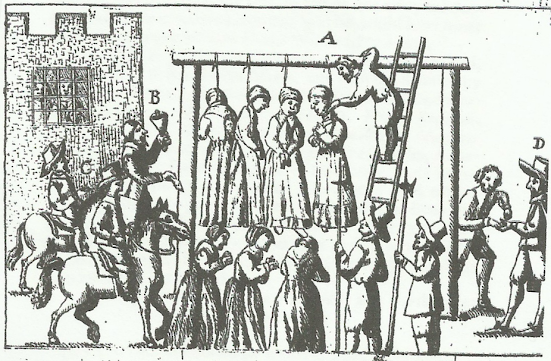
Illustration of the Newcastle witch hunt of 1650 from Ralph Gardiner's account in 1655

18 May 2021

Who should we blame for Singapore's second Covid lockdown?

Ship of fools, woodcut, 1494 Basel

Singapore returned to a state of lockdown on 8 May 2021. With all indoor sports, indoor dining, mandatory work from home, and social gathering severely restricted (and with all schools switching to home-based learning), this is a mere quarter-turn of the screw away from the complete lockdown ("Circuit Breaker") from April 2020.

Much has been made about the quality of decision-making of Singapore's Interministerial Covid Task Force in this matter.  Once again like the initial dithering and delays that led to travellers from Wuhan colonising Singapore with the Covid virus, our leaders dithered for a month while India reported its worst Covid spikes in a year. Just like in the Wuhan case, Singapore's leaders sat on their hands long after India announced the lockdown of its capital. Singapore's leaders allowed travellers from India into the country, in increasing numbers, even after the Indian government blamed the outbreak not on the record crowds at the Kumbh Mela river festival but on the "India variant" of the Covid virus.

It was only when the UK declared its travel restrictions on India that Singapore followed suit, on the same day. Yet why do Singapore's leaders blame Singaporeans for its own India variant Covid clusters and the subsequent lockdown?

13 January 2021

Can we live together with TraceTogether?

Why is trust in TraceTogether at an all-time low?

Singaporeans should be celebrating. After nearly a year of lockdown, Singapore has entered the elusive "Phase 3" despite the inter-ministerial covid task force tripping itself over and over again with poor communication skills and crisis management and a tendency to allow PR agendas to trump medical-scientific expertise and set policy. By refusing to hold daily televised coronavirus briefings during the initial darkest months, this team failed to reassure, educate, guide, and rally the public and to shore up the government credibility and authority during the pandemic. Yes, it's time to talk about TraceTogether fiasco, where this credibility and authority is finally found wanting by the public.

05 July 2020

Can the PAP run on its Covid-19 performance and plans in a Covid-19 election?

What should this year's elections be about?

Singapore's general election campaign seasons tend to follow a general pattern: An initial period of free-for-all debates between the parties on all issues before the ruling People's Action Party leaders announce at the mid-point what issue or message the general election should hinge on. This is the main issue its challengers should engage them on, and the lens through which Singapore's responsible mainstream newspapers should refract and colour their daily election reporting and analysis. Strange as it sounds, this is how elections work in Singapore.

This year, the PAP appears to have made Covid-19 the central issue for the rest of the campaign period, challenging opposition parties to unveil their plans for the Covid-19 recovery. Is this a blunder that could snatch a PAP defeat from the jaws of victory, as opposed to the brilliant message that snatched a PAP victory from the jaws of defeat in 2015?

"Not all the statesman's power or art
could turn aside Death's certain dart"
Illustration by Thomas Rowlandson, in The English Dance of Death, 1816

03 July 2020

Modelling the 2020 Singapore General Election


Will this be a game of chess, or a game of twister?
Choose wisely when you play with Death!

When its prime minister Lee Hsien Loong called for parliament to be dissolved on 23 June 2020 for snap polls, Singapore joined an exclusive club of nations holding national elections during the global pandemic. South Korea's ruling Minjoo Party won its snap polls easily and even extended its majority in parliament. Taiwan's Tsai Ing-wen was handily reelected in its presidential polls. Will Singapore's People's Action Party do the same? Is it checkmate and a total wipeout for Singapore's opposition, which held just 6 seats out of 89 after the 2015 election?

08 June 2020

Where was Singapore's Prime Minister during the Covid-19 crisis?

On 7 June 2020, Singapore prime minister Lee Hsien Loong made a national broadcast. In his half hour address to the nation, the prime minister set out Singapore's position in its fight against the coronavirus pandemic, outlined the potential long-term problems in a post-coronavirus world and hinted at the wide-ranging reforms his cabinet team would propose and unveil in further broadcasts.

In his typical Deus Absconditus style, Lee set up and delegated the coronavirus response to a "Multi-Ministry Covid-19 Taskforce", vanished from the public eye almost completely, and let them run the show entirely. This team has since shown itself to be marred by poor communication skills and crisis management and a tendency to allow PR agendas to trump medical-scientific expertise and set policy. By refusing to have daily coronavirus briefings, this team failed to reassure, educate, guide, and rally the public and to shore up the government credibility and authority during the pandemic.

Credibility and authority need to be replenished because when dealing with a novel virus, governments and health agencies around the world are more than likely to stumble, reverse course, and refine their approaches as more is learned about the virus. It is also likely that institutional blind spots lead to massive outbreaks such as the one that is still continuing in Singapore's guest worker dormitories.

Does the prime minister's address to the nation now make up for these missteps and failures?

Can Minilee pull an FDR?

05 May 2020

What can Singapore do about its dormitory population?

Are guest workers a hidden and permanent underclass in Singapore?

"S11", a dormitory or worker camp in Singapore
Photographer: Suhaimi Abdullah/Getty Images
The segregation of COVID-19 numbers in Singapore's daily reporting is a misguided attempt to boost domestic morale through window dressing and impression management. Don't panic at these high numbers; guest workers living in dormitories are not part of the community, they're not local, they're not permanent residents! This intrusion of politics into technocratic competency in Singapore's effort to manage the coronavirus pandemic is now affecting key policy. The minister heading the coronavirus task force announced yesterday in parliament that our goal is to end the lockdown when new daily community cases are at low single digits. One can only infer this will be achieved by simultaneously discounting new daily numbers in the ongoing outbreak in the dormitories.

This attempt to handwave away more than 90% of SARS-COv-2 infections in Singapore is not supported by medical science. From an epidemiology standpoint, what's happening in Singapore's guest worker dormitories is a classic community outbreak. Contact tracing has established early on that guest workers living in dormitories were infected through a cluster at Mustafa Centre, a megamall popular with Singaporeans, permanent residents, guest workers, as well as tourists from all over the world.

26 April 2020

Was Singapore just unlucky in its coronavirus fight?

For want of a nail?

Singapore's coronavirus response has been lauded as a golden standard for the international community, an oasis of technocratic competence. In as little as 3 months since the virus arrived in Singapore, a massive outbreak has hit its guest worker community and its sterling reputation.

The media narrative paints a compelling story: Singapore is a poster child that merely got unlucky. Its technocrats had the situation in hand by following the protocols it developed from its encounter with SARS 2 decades ago. They had just an unfortunate, single blind spot in an area no one could predict. To use Benjamin Franklin's retelling of the proverb of the nail, "a little neglect" of Singapore's overcrowded and unsanitary dormitories led to the failure of Singapore's battle against coronavirus.

Wallace Tripp, 1973 illustration from
A Great Big Ugly Man Came up and Tied his Horse to Me: A Book of Nonsense Verse

08 April 2020

Can Singapore's politicians listen to the experts?

We established in our previous post that panic buying is a human response to crisis. Panic is fed by the trio of fear, uncertainty, and doubt.  In Singapore itself, the government dithered and delayed before the politicians put the technocrats in charge to deal with the global pandemic. Before that, various departments issued directives that were at cross-purposes with each other. These public failures of judgement and coordination fed the fear, uncertainty, and doubt in Singapore, which exploded into an wave of panic buying across the island when the authorities raised the national disease outbreak alert to Orange on 9 February 2020.

Trade minister Chan Chun Sing, a ministerial member of the multi-named task force, reacted with a furious, dismissive, and insulting rant some time later, to a group of businessmen at the Singapore Chinese Chamber of Commerce and Industry. He ridiculed the panic buyers, insulted them, and accused them of undermining Singapore's national standing and survival.

Sure, minister Chan might not be a psychologist, sociologist, or a communications expert but was what he said that wrong? Didn't he say what everyone else was thinking? Wasn't this what we'd expect from a straight-talking former career general? Wasn't this highly strategic and forward thinking befitting a former Chief of the Army and a former front-runner for Singapore's next prime minister?

Playing chess with Death during the plague

15 May 2019

How will Singapore's leaders use its new Fake News law?

On 8 May 2019, the Singapore parliament passed the Protection from Online Falsehoods and Manipulations bill into law. As of the time of the publication of this blog post, either the president has not given her assent or the minister has not made the decision to commence the law in the Gazette.

We noted earlier that even though the ruling People's Action Party has a supermajority which ensures the passage of any bill proposed by the cabinet, the key issues have always been whether the cabinet can gain the confidence of stakeholders and industry interests in the bill, whether there will be corrections or clarifications of the more unsettling portions of the bill, and whether the bill passed would satisfy that audience.

Power is power, or is it? The power to pass laws is absolute power, or is it?
A snapshot of attitudes, comments, and actions from stakeholders and members of the industry in the run-up to the debate suggest that clarifications at the very least had to be made and made convincingly, especially if no corrections or U-turns could be afforded by the cabinet on the bill.

So did the parliamentary debate provide suitable clarification to gain the confidence of industry interests and stakeholders?

05 November 2018

Should permanent residents and dual citizens serve national service in Singapore?

Minister of Defence Ng Eg Hen previously made nice comforting noises (otherwise known as motherhood statements) in parliament about how safety is a top priority of army training, in light of a recent escalation in fatal training incidents. But isn't 1 reported accident every 3.5 months statistically significant for an armed forces that has only 35,000 conscripts at any time? Doesn't this statistic indicate the presence of serious and pervasive systematic failings in the Singapore Armed Forces (SAF)?

Liu Kai, the victim in the latest SAF fatal training accident and possibly SAF's fatally compromised culture was a permanent resident. Kok Yuen Chin, the victim in the previous SCDF fatal training accident was also a permanent resident. Many Singapore PRs and dual citizens who are legally obligated to serve national service at the age of 16 have every right to ask to ask the question: Should they just say no to their NS obligations and give up their permanent residence or Singapore citizenship?

Soldiers are meant to die heroically in battle.
Which is why every accidental training death must be investigated.

31 August 2018

Is there a public housing crisis in Singapore? NDRS 2018 edition


After watching prime minister Lee Hsien Loong's 2018 National Day Rally speech, many Singaporean homeowners asked the question: Is it worth it to opt into the new housing improvement (HIP 2) and voluntary early redevelopment scheme (VERS)?

Yet his latest housing minister recently announced that the value of public housing will plummet to zero at the end of their 99 year lease. Are Lee's new schemes an exercise in futility in retaining the value of your Housing Development Board (HDB) flat? Or do they show up the ongoing "asset enhancement" schemes as doomed and misguided? Should Singaporean homeowners feel more secure after Lee's new promises, or more angry at the PAP's old promises?

More importantly, do Lee's new HDB schemes actually solve the public housing crisis in Singapore?

18 July 2018

Is Singapore's welfare system failing its poor?

Yes, democracy classrooms are still taking place despite the New Narratif ban

Kirsten Han is organising "democracy classrooms" in Singapore in her personal capacity. This surely is a courageous and principled decision, given the Singapore government's proscription of New Narratif's workshop arm and its bizarre declaration that such activities, especially when funded by George Soros, are "political in nature" and "contrary to Singapore's national interests".


While everyone else including ministers can organise and participate in public forums, talks, and feedback sessions in educational institutions to discuss, question and even criticise aspects of Singapore's public policy, Kirsten's New Narratif is barred from doing so.

That Ms Han remains a free woman in Singapore is testament to the common sense of its civil service; the Singapore government's proscription of New Narratif/OSEA and apparent grudge match against George Soros may be political in nature, but democracy classrooms and questioning of public policy are legitimate activities that cannot be proscribed.

Charity, welfare, social spending, and the deserving poor

The latest democracy classroom was about poverty in Singapore. Social workers from welfare organisations shared, in their personal capacity, their experience working within Singapore's social welfare sector. To wit: As external vendors directly funded by Singapore's social spending budget, these welfare organisations are obliged, when helping the poor, to apply the state's criteria and checklists, which define who are eligible and deserving of handouts.


The consensus within the industry, or at least between the professionals in the democracy classroom, is that the rules as drawn up by the state often disenfranchise the poor further. The professionals in the industry feel that the very poor seem to be excluded from qualifying for welfare in Singapore, as a direct result of certain discriminatory criteria. As a whole, the state agencies seem unsympathetic to the conditions of poverty. Onerous and inflexible criteria that are put in place to prevent the very poor gaming the welfare system instead cause humiliation and additional misery and hardship to the petitioners.

Plot twist: Singapore is an invisible welfare state

From the perspective of professional social workers, every instance of a poor client who must be turned away and prevented from dipping into welfare handouts is an indictment of the system. From a sociological viewpoint however, we need to ask if this is a feature in the system and not a bug.

Frequent government critic Chua Beng-huat has noted that Singapore, while authoritarian, is a liberal state-socialist polity. The political compact between the ruling People's Action Party and Singapore citizens is underpinned by 3 key public policies: public housing, universal education, and universal healthcare insurance.

You get handouts, everyone gets handouts!
Singaporeans may not know it but their housing, education, and healthcare are highly subsidised by the state, to an extent that would make most affluent western nations blush (save for the Scandinavians). Since independence, the middle class in Singapore has been the main beneficiary of state welfare.

It's a form of state welfare that doesn't require people to approach the civil service with hat in hand. The state knows when you are eligible for handouts, how much handouts you should get, and all of it is done without legwork, casework, or pure hard work. Education is automatically subsidised: all school-going children get vouchers that they can use while adults receive free money every year to go for courses and skills upgrading. Most of Singapore's housing grants and subsidies are automatic and worked into the property bill. Concessions for hospital bills and healthcare premiums are automatically applied.

Which begs the question: why don't the very poor get automatic vouchers? Everyone gets automatic vouchers. Singapore's largest, universal automatic handout this year is for DIGITAL TV. Yes, that's right. Every household gets a free voucher for digital television, whether or not they already have one and whether or not they want one, and whether or not they might just use the voucher and get one more on top of what they already have. And policymakers talk about how it's important not to let the poor get away with gaming the system!

Plot twist: It's not about the poor

What is the difference between Daniel Yapcelebrity state welfare recipient of the month, and the social worker's dirt-poor client whose application for welfare grants keep getting rejected? [Full disclosure: I have previously written a healthcare article for The Middle Ground, which was co-founded by Daniel.]

Policy preferences.

Daniel Yap is an economically productive member of society. Gainfully employed. Long term employed. The problem cases? Long term unemployed, itinerant workers in the informal economy, have a debt sheet, married to unnaturalised spouses.

From a social work perspective, such a policy is discriminatory and ironic: the very poor tend to have lower employment opportunities, causing them to participate in the informal economy if at all. It's hard to build up savings if you're an itinerant worker. And marrying out seems to be a universal solution if someone is too poor to participate in the local marriage market.


From a sociological perspective, welfare policy is not about defining the poor, helping them, or punishing them for being poor. Welfare policy is about defining the middle class and its habits as the norm that potential recipients should aspire towards, i.e. economically productive, gainfully employed, savings-positive but members of an industrial, consumerist economy.

It is no surprise that Singapore's criteria for welfare handouts is not much different from most of the industrial west, minus the socialist Scandinavian states who are finally regretting their experiments with universal basic income, aka "living wage".

Can Singapore live with its welfare system?

Singapore's welfare system may be discriminatory. It may indeed benefit the middle class far more than the poor. But it is a coherent, consistent policy that reflects the values and preferences of its policymakers. And piloted by Singapore's bureaucracy, it is a remarkably competent policy that delivers the same outcome, day in and day out.

Bleeding heart arguments will be ineffective against this.

Very ineffective.
We at Illusio posit an alternative argument that may have more traction. Namely, Singapore's current administration of welfare handouts is unsustainable. It is due for policy failure, and should be reworked - preferably to an automatic voucher system that cuts down the unwieldy welfare state bureaucracy and the VWO ecosystem to a manageable size to reduce unproductive busy-work.

We note that Singapore's welfare system (and its inculcation of middle class habits and norms) was tailor-made for an expansionary, industrialising economy between 1965 to the early 1990s. In such an expansionary, industrialising climate brimming with employment opportunities and massive trickle-down effects, it was correct to assume that the poor could lift themselves out of poverty easily so long as they participated in the economy.

Singapore today is a mature economy with sub 2% GDP growth. Ministers are increasingly aware of the entrenchment of poverty. Its success in creating a stable and large middle class has resulted in a situation where social capital is throwing a spanner into meritocracy and mobility. Its prime minister made a speech acknowledging the evolution of Singapore into a class society.

The assumptions and foundations behind the administration of welfare handouts no longer hold true. There is no expansionary economy today, no massive and easy trickle-down effect to lift the poor. Failure to realise that circumstances have changed will result in policy failure: an entrenched, permanent underclass. Let's assume that future bureaucrats continue their hostility towards the very poor. Then we will have an angry, entrenched, permanent underclass.

Sociology tells us that any entrenched, permanent underclass will pursue success by any other means necessary, and that an angry, entrenched, permanent underclass will create social and legal problems. In the words of Papalee: riots will break out and blood will flow in the streets.

The policy failure point is not that far-fetched or distant: Yishun, Singapore's most criminal suburb, is on its way to becoming a Parisian banlieue.

Singapore cannot afford to run its welfare system like this, not if it wants to keep its reputation as a wealthy, crime-free global city.

20 March 2018

Are Singapore's fake news public hearings a waste of time?

Singapore's Select Committee on Deliberate Online Falsehoods have begun hearing testimonies from the public.

It is tempting to dismiss the proceedings as a prelude to new laws against free speech online. But it is more profitable to suss out the complexities, competing agendas, inconsistencies, and blind spots that arise from select committee hearings even as the committee balances its fact-finding function with its practical role in parliamentary decision-making and consensus-building.


In other words, ignoring a select committee's public hearings is an indicator of political illiteracy.