Earlier last year, we commented on the case of Lee Wei Ling and Lee Hsien Yang vs Attorney-General that due to their specialist knowledge and unique mandates, the National Archives of Singapore, its fellow SARBICA member associations, or even the International Council of Archives should have submitted an amicae curiae brief to the court if they were not approached by either side to testify.
We argued that a community of archival experts could have provided their perspective on how archival institutions are mandated, given authority and institutional independence, and governed via a clear set of legal frameworks and strict operational and ethical guidelines to handle "secrets", "copyright", and "ownership".
At that time, we were confident that had the NAS or its fellow international archival bodies raised their voices on archival procedure and copyright, the case could've been settled differently, and we were perplexed on their no-show. That is, until today.

Showing posts with label architecture. Show all posts
Showing posts with label architecture. Show all posts


03 November 2014
Living with Myths IV: Multiculturalism
Being a review of the 4th in a year-long series of seminars
The previous Living with Myth seminars showed that despite exuberant accusations of historical revisionism by the political establishment, there exists an abundance of theoretically sound, evidence-based research within Singapore that easily refute the PAP government's ageing master narratives, and even catch the state and the political leadership in the process of rewriting and reinterpreting history.
Yet doing history isn't just about calling out Papalee on his national narrative of struggling with a series of communist plots in the 1950s to the 1980s but recognising the role these narratives have in the building of an authoritarian security state that run on rule by law rather than on rule of law. Similarly, doing history isn't just about identifying the triumphalist "rags to riches" narrative but understanding how such a narrative has been used to justify Singapore's plunging levels of social spending since the 1980s, how welfare exists in Singapore but is not acknowledged as welfare, and how programs for the poor more often than not become poor programs.
And if the New Singapore History project is about challenging the master narrative and expanding the space for other historical viewpoints and analyses, then the result is surely a more robust debate on public policy. That seems to be the case for this seminar's theme on multiculturalism.
Myths of Race and Place in the Fragments of Old Singapore City
From a critical perspective, the creation of heritage is equal parts remembering and forgetting, of elevating the heritage of the right people and diminishing the heritage of people who are out of place, out of time. In his presentation, NUS prof Imran bin Tajudeen presented a series of historical maps and city plans by the colonial government and maps them onto the modern day heritage spaces of Singapore, i.e. Little India, Chinatown, Geylang.
From the historical maps and plans from Singapore's early days, it is clear that today's heritage sites are designed in accordance to the modern CMIO model (that is, Singapore's official racial policy of recognising Chinese, Malays, Indians, and "Others"). What is unacknowledged is the larger diversity of ethnicity and space within these areas, the expanse and importance of these ethnic quarters (apparently the Bugis took up half of Singapore Town in the early days and had the most developed section next to the European quarters), and the urban roots of the word "kampong" and the sophistication of the kampong house, which was only eclipsed by the shophouse style later in the 19th century.
While Dr Imran uses maps of the colonial government and modern Singapore to identify the shrinkage of ethnicity, heritage and identity, one should be more suspicious and questioning of these tools. By planning and ordering space, and spatialising communities, a map is an instrument of governmentality, of claiming and exercising control over its subjects. Yes, there was much wider recognition of ethnicity by the colonials but the maps seem to suggest they're the first in Singapore to racialise space. A fuller, more counterhegemonic account would have to correlate these maps to accounts of life written by residents, merchants, laborers living in Singapore Town in those early years.
Maze and Minefield: Reflections on multiculturalism in Singapore
Instead of presenting from a piece of research, the presentation of Institute of Policy Studies and Asia Research Institute prof Lai Ah Eng began by identifying the first principles of her field of cultural anthropology and applying them almost extemporaneously to the current debate on multiculturalism in Singapore.
She argues that if one accepts that ethnicity is an elective, situational, and performative identity, then the state-approved CMIO model, if taken way too seriously and unquestioningly, will lead to a racist, over-racialised, or over-determined multiculturalism where reified, static concepts of race are offered as the first explanation or even solution to really-existing problems when other perspectives such as class, globalisation, colonialisation may be more appropriate. Singapore's success (and social problems like drinking, gambling, drug abuse, etc) are seen through racial lenses, defeating the purpose and spirit of multiculturalism.
Singapore's immigration policy is accused by minority groups as stealth Sinification; by liberals as racist xenophobia; by reactionaries as anti-national, but by no one as bad, unsustainable economics and development. The failure of new immigrants to integrate cannot be understood by a government who sees these people as the same race and ethnicity as the Singaporeans who choose to reject them. For Lai, belonging and identity exist as real things, even if they are mediated by self-representation, subject to state narrativisation, or are reified and simplified for consumption.
As a policy consultant to the state, Lai is naturally reluctant to divulge actual instances where a racial approach to dealing with a public policy issue turned out to be entirely appropriate, though she hints at it. As a counterpoint to the popular notion that class matters more than ethnicity and culture, I would offer the story of how Le Corbusier's layout of apartment flats in Chandigarh offered challenges to its inhabitants due to his lack of exposure to Indian culture and living.
Cosmopolitanism: Aspirations, Risks or an Everyday Disposition?
If Lai sought to illustrate how first principles of history and anthropology could guide our responses to Singapore's multiculturalism debate, Ho's presentation illustrates how a lack of theoretical and methodological foundations can easily lead one astray. Ho read aloud a commentary she wrote on the same set of debates as Lai, notably the Hong Lim Park protests against Minilee's population white paper. Like her fellow panelists, Ho has no love for the CMIO model. She however sees all narratives of identity and belonging (especially claims to being "local") as xenophobic and alienating the cosmopolitan immigrant.
By way of introduction, the presentation begins with a quote from Goh Chok Tong about multiculturalism and then launches into a theory-free, evidence-free, opinion-laden commentary on multiculturalism in Singapore. The Goh quote plays no significance in her commentary; it is neither a zero point of a state-sponsored understanding of cosmopolitanism, nor it used to contrast the multicultural vision, mode, and experience of people living in Singapore in the colonial and pre-colonial era.
Her fellow panelists were not convinced of the rightness of her presentation or commentary. I have excerpted their comments in the Q&A section to contrast their very polite, even passive disagreement.
Elaine Ho: Singapore is an immigrant society. What identity, belonging?
Imran bin Tajudeen: Actually the Malay-Nusantarans will laugh at today's debate over immigration. They were here 300 years ago and by the 1800s and 1900s, we get memoirs and accounts of how alienated and pushed out they felt by the new Chinese immigrants. It's the same thing today!
Lai Ah Eng: If we want to ask how Singaporeans should be more multicultural towards immigrants, shouldn't it be fair to ask that foreigners and immigrants be multicultural towards us?
A theoretically-sound and evidence-based response to the immigration controversy may lie in studying the historical narrative of Malayanisation process and contrasting it to the present-day narrative of what Lai Ah Eng identifies as the foreign talent-foreign immigration phenomenon. This will allow us to deconstruct the very ideas of "natural economic development", "nationalism", "xenophobia", "cosmopolitanism" that Ho raised but failed to examine critically.
29 September 2014
Living with Myths III: Beginnings
Being a review of the 3rd in a year-long series of seminars
Even as the Singapore state and its proxies in academia and the newsroom charge the Living with Myths project and various historians associated with recent historical research with the thoughtcrime of "revisionism", it is heartening to note that the seminar series had, despite a shaky start, has consolidated its theoretical position by turning the spotlight and the charges back towards the state.
Academics are stepping up to the challenge to show that "The Singapore Story" is always in a state of flux, that the state itself is always reinventing and reinterpreting history in response to changing political and policy environments.
Consequently, if there exists no unbroken history, no always-existing stable subject, then there must have been a Beginning in the form of a violent rupture and reconfiguration in terms of thinking and seeing things, the establishment of a master narrative that attempts to portray itself as orthodox, natural, and arising out of nothing.
"Beginnings" then is a reference to Foucault's zero point, the introduction of a particular discourse that has since shaped how we see the world, describe it, and picture ourselves in it—such that we can scarcely think of any other way to see the world, describe it, that it appears as though from time immemorial we have always been seeing the world this way... naturally. (As an example, see the invention of kiasuism and observe how Singaporeans can't seem to talk about themselves without using the word.)
It follows also that Living With Myths, as a historical project, is a form of discourse analysis that studies such historical breaks to demonstrate that certain paradigms of thought, of social perception, of the ideology-ladenness of historiography weren't always so, and should never be taken as natural or commonsensical.
In his presentation, NUS prof Huang Jianli examines the rags-to-riches narrative of the captains of industry in early 20th century colonial Singapore, and the place of this biographical genre in popular culture. The popularity of this discourse corresponds to the intersection of multiple interests: the subject who seeks validation in self-aggrandizement (and denial of setbacks), the reader who seeks validation that perfect social mobility exists (and denial of class), and a capitalist social order that requires validation of narrow economic rationality and methodological individualism (and denial that people act, negotiate, and compete in groups).
Huang argues that the national histories that document the "rise of the nation" are in fact the same genre writ large. The unspoken implication is that national histories also suffer from the same anxieties of influence and defensive denials and narrative blind-spots and lacunae as "big men of industry" narratives.
Huang points out also the depoliticisation of the subject in rags-to-riches narratives. The rehabilitation process of Tan Kah Kee and other Chinese businessmen in Singapore history involves an agreement to write out their involvement and interests in the politics of their time; what's more interesting and unmentioned is how the politics of many Straits-born Chinese and Chinese who made their fortunes in Malaya involve (or indeed problematise) issues of national allegiance, citizenship, and loyalty—in an age where the nation was not quite a thing, where Malaya (or Singapore) were not quite colonies and not quite nations either.
The Battle for Merger is a series of radio talks given by Lee Kuan Yew as prime minister between September to October 1961 in the immediate aftermath of the split in the People's Action Party that led to the left wing of the party joining the vote of no confidence against the PAP government and the subsequent formation of the Barisan Sosialis. (The entire series is available on the National Archives of Singapore website, just search for the exact phrase here)
Seng Guo-quan performed a very close reading of the first speech in the Battle series, where Lee sticks the Communist label onto Lim Chin Siong (alleging that he had always been a communist and that his renunciation of communism as part of his negotiated release was insincere) and the pro-Communist label onto Woodhull, Fong, et al (alleging that their renunciation was real but they were influenced by Lim to rejoin the cause).
Of course Lee uses the meaning of pro-Communist vaguely and in variance with how the phrase had been reported by Singapore's newspapers previous to 1961, when it had actually meant, pro-"Communist Party" or pro-Soviet. Seng points out how Lee in this speech is creating history ex nihilo by inventing categories from scratch, turning his political opponents into subjects via classification into these categories, and making these categories inform their political identities in the eyes of an obviously politically illiterate populace.
Where Seng doesn't go (and Dr PJ Thum, an organiser of Myths, almost picks up in the Q&A session) is how this exercise of governmentality, categorisation, and classification is really an attempt by Lee to carve up a safe zone for his party in the political context of the 1950s and 60s. Thum points out this was a time where the electorate was largely left-leaning and voted for socialist and redistributive policies and parties, and where virtually all the parties in the political landscape—PAP not exempted—were left of centre, leftist, or radical left.
Following Thum's logic, Lee's move is equivalent of declaring his rump-PAP as the acceptable Decent Left of the 1950s. Where the popular, unofficial narrative has Lee "betraying" the Left or the official narrative has Lee "riding" the tiger of the Communist Left, what Seng and Thum inadvertently prove is that Lee's rump-PAP, despite its actions against the Barisan, remained firmly on the Left even through that difficult decade.
Thanks to tools like Newspaper SG, it is possible to go back in time to see that for all the national angst, calls for a referendum, a parliamentary debate (with the whip lifted!!!) about building a casino in Singapore that really isn't a casino, that we've actually been here before. In the early days of independence when a Sentosa casino was earmarked, as in officially planned and approved. With appearances from PM Lee expounding his vision of how a neo-Spartan Singapore will not be corrupted by a casino in Sentosa.
NUS prof Lee Kah-wee examines the 'modern' debate surrounding the RWS and basically comes to the same conclusion as Ho Chi Tim in the previous seminar: that for all the neo-Spartan rhetoric about the government being against casinos (and welfare) and promoting a rugged, tough, individualistic society, it has ironically been administering national gambling (in the form of the Sentosa Casino planning as well as the institution of Toto) and social welfare schemes even as it dresses them up to conform to its official anti-welfare, anti-gambling ideology.
Even as the Singapore state and its proxies in academia and the newsroom charge the Living with Myths project and various historians associated with recent historical research with the thoughtcrime of "revisionism", it is heartening to note that the seminar series had, despite a shaky start, has consolidated its theoretical position by turning the spotlight and the charges back towards the state.
Academics are stepping up to the challenge to show that "The Singapore Story" is always in a state of flux, that the state itself is always reinventing and reinterpreting history in response to changing political and policy environments.
Consequently, if there exists no unbroken history, no always-existing stable subject, then there must have been a Beginning in the form of a violent rupture and reconfiguration in terms of thinking and seeing things, the establishment of a master narrative that attempts to portray itself as orthodox, natural, and arising out of nothing.
"Beginnings" then is a reference to Foucault's zero point, the introduction of a particular discourse that has since shaped how we see the world, describe it, and picture ourselves in it—such that we can scarcely think of any other way to see the world, describe it, that it appears as though from time immemorial we have always been seeing the world this way... naturally. (As an example, see the invention of kiasuism and observe how Singaporeans can't seem to talk about themselves without using the word.)
It follows also that Living With Myths, as a historical project, is a form of discourse analysis that studies such historical breaks to demonstrate that certain paradigms of thought, of social perception, of the ideology-ladenness of historiography weren't always so, and should never be taken as natural or commonsensical.
Living with the Myth of Rags-to-Riches in the Nanyang Diaspora
In his presentation, NUS prof Huang Jianli examines the rags-to-riches narrative of the captains of industry in early 20th century colonial Singapore, and the place of this biographical genre in popular culture. The popularity of this discourse corresponds to the intersection of multiple interests: the subject who seeks validation in self-aggrandizement (and denial of setbacks), the reader who seeks validation that perfect social mobility exists (and denial of class), and a capitalist social order that requires validation of narrow economic rationality and methodological individualism (and denial that people act, negotiate, and compete in groups).
Huang argues that the national histories that document the "rise of the nation" are in fact the same genre writ large. The unspoken implication is that national histories also suffer from the same anxieties of influence and defensive denials and narrative blind-spots and lacunae as "big men of industry" narratives.
Huang points out also the depoliticisation of the subject in rags-to-riches narratives. The rehabilitation process of Tan Kah Kee and other Chinese businessmen in Singapore history involves an agreement to write out their involvement and interests in the politics of their time; what's more interesting and unmentioned is how the politics of many Straits-born Chinese and Chinese who made their fortunes in Malaya involve (or indeed problematise) issues of national allegiance, citizenship, and loyalty—in an age where the nation was not quite a thing, where Malaya (or Singapore) were not quite colonies and not quite nations either.
The Myth that the Battle For Merger was a Battle against ‘Communists’ and ‘Pro-communists’
The Battle for Merger is a series of radio talks given by Lee Kuan Yew as prime minister between September to October 1961 in the immediate aftermath of the split in the People's Action Party that led to the left wing of the party joining the vote of no confidence against the PAP government and the subsequent formation of the Barisan Sosialis. (The entire series is available on the National Archives of Singapore website, just search for the exact phrase here)
Seng Guo-quan performed a very close reading of the first speech in the Battle series, where Lee sticks the Communist label onto Lim Chin Siong (alleging that he had always been a communist and that his renunciation of communism as part of his negotiated release was insincere) and the pro-Communist label onto Woodhull, Fong, et al (alleging that their renunciation was real but they were influenced by Lim to rejoin the cause).
Of course Lee uses the meaning of pro-Communist vaguely and in variance with how the phrase had been reported by Singapore's newspapers previous to 1961, when it had actually meant, pro-"Communist Party" or pro-Soviet. Seng points out how Lee in this speech is creating history ex nihilo by inventing categories from scratch, turning his political opponents into subjects via classification into these categories, and making these categories inform their political identities in the eyes of an obviously politically illiterate populace.
Where Seng doesn't go (and Dr PJ Thum, an organiser of Myths, almost picks up in the Q&A session) is how this exercise of governmentality, categorisation, and classification is really an attempt by Lee to carve up a safe zone for his party in the political context of the 1950s and 60s. Thum points out this was a time where the electorate was largely left-leaning and voted for socialist and redistributive policies and parties, and where virtually all the parties in the political landscape—PAP not exempted—were left of centre, leftist, or radical left.
Following Thum's logic, Lee's move is equivalent of declaring his rump-PAP as the acceptable Decent Left of the 1950s. Where the popular, unofficial narrative has Lee "betraying" the Left or the official narrative has Lee "riding" the tiger of the Communist Left, what Seng and Thum inadvertently prove is that Lee's rump-PAP, despite its actions against the Barisan, remained firmly on the Left even through that difficult decade.
Casino Debates Revisited: Learning from History and Las Vegas
Thanks to tools like Newspaper SG, it is possible to go back in time to see that for all the national angst, calls for a referendum, a parliamentary debate (with the whip lifted!!!) about building a casino in Singapore that really isn't a casino, that we've actually been here before. In the early days of independence when a Sentosa casino was earmarked, as in officially planned and approved. With appearances from PM Lee expounding his vision of how a neo-Spartan Singapore will not be corrupted by a casino in Sentosa.
NUS prof Lee Kah-wee examines the 'modern' debate surrounding the RWS and basically comes to the same conclusion as Ho Chi Tim in the previous seminar: that for all the neo-Spartan rhetoric about the government being against casinos (and welfare) and promoting a rugged, tough, individualistic society, it has ironically been administering national gambling (in the form of the Sentosa Casino planning as well as the institution of Toto) and social welfare schemes even as it dresses them up to conform to its official anti-welfare, anti-gambling ideology.
30 August 2007
Architectures of Control
From the introduction to Architectures of Control:
Increasingly, many products are being designed with features that intentionally restrict the way the user can behave, or enforce certain modes of behaviour. The same intentions are also evident in the design of many systems and environments.
I usually add to my blogroll without much fanfare, but here's a site that I would make some noise about. And I'm sure Singaporean readers would find this fascinating - architectures of control exist everywhere in the world, and it's time we start recognising in our own landscape, geography, and urban design as well.
Need proof of this blog's mandatory reading status? You might want to begin with:
Casino design and slot machine winning chances
Why your third-party battery lasts shorter on a Nokia
The default choice in OSes, programmes, and Starbucks
How airports keep people moving
15 September 2005
In a school in Singapore...
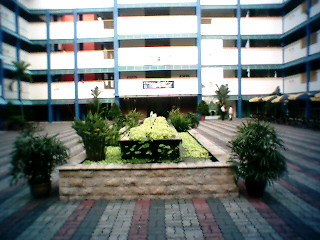
What is Lenin's tomb doing in a school in Singapore???
Filed under: bad architecture, koi ponds, Leninist state
Subscribe to:
Posts (Atom)