Showing posts with label the law. Show all posts

24 April 2025

Will PJ Thum present the first and only poll of the election?

Cancel your appointments for the night of 24 April 2025. If you have decided to attend an election rally, you need to reconsider your life priorities. Sure, you can spend 3 hours in a field or stadium experiencing attempts by politicians and their plants in the crowd to whip the crowd into a frenzy. We at Illusio have found a far more important, more exciting, more elusive event in Singapore's political history, one that is literally singular and may never be repeated again.

A political rally, from Wikimedia

This is why you should attend Dr PJ Thum and New Naratif's The Citizen Agenda at 7pm, at The Projector at Golden Mile (yes, it's a free event).

14 February 2022

When will it be safe to support the Workers' Party again?

On 10 February 2022, the Committee of Privileges presented its official report on Ms Raeesah's Khan's lies to the Singapore Parliament.

Here are some of the salient points from the report.

For all intents and purposes, the fat lady has sung

09 February 2022

Will the PAP pay a political price for the committee of privileges?

Politics is a funny business. Both sides of the political divide in Singapore can agree on several immutable facts: Worker’s Party MP Raeesah Khan told several lies in Parliament for months, eventually admitted, apologised, and resigned for lying, a complaint for breach of parliamentary privilege was filed, and a committee of privileges convened to investigate the matter.

According to certain online commentators, given the same facts, it is the People’s Action Party that must pay a political price because the committee of privileges allowed Khan to implicate the leaders of WP (notably Leader of the Opposition Pritam Singh and Opposition Whip Sylvia Lim) for their possible role in abetting her lies, and then to investigate these allegations. When did they know of the lie? What did they say to Khan over the course of 3 months? Why did they keep silent for 3 months? Why, the PAP will pay for the committee going in this direction, not the WP!

19 December 2021

Should Singaporeans trust the parliamentary Committee of Privileges?

Every night for the past two weeks, Singaporeans watched as the Committee of Privileges investigated Raeesah Khan, formerly MP for Sengkang GRC and leading members of her former political party, for lying in Parliament.

Is the Committee of Privileges politically motivated? Is this investigation a witch hunt and a prelude to "fix the opposition"?

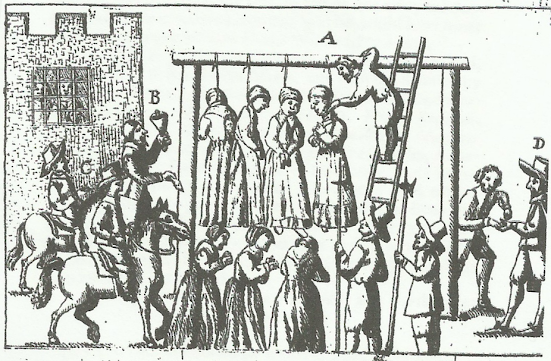
Illustration of the Newcastle witch hunt of 1650 from Ralph Gardiner's account in 1655

15 May 2019

How will Singapore's leaders use its new Fake News law?

On 8 May 2019, the Singapore parliament passed the Protection from Online Falsehoods and Manipulations bill into law. As of the time of the publication of this blog post, either the president has not given her assent or the minister has not made the decision to commence the law in the Gazette.

We noted earlier that even though the ruling People's Action Party has a supermajority which ensures the passage of any bill proposed by the cabinet, the key issues have always been whether the cabinet can gain the confidence of stakeholders and industry interests in the bill, whether there will be corrections or clarifications of the more unsettling portions of the bill, and whether the bill passed would satisfy that audience.

Power is power, or is it? The power to pass laws is absolute power, or is it?
A snapshot of attitudes, comments, and actions from stakeholders and members of the industry in the run-up to the debate suggest that clarifications at the very least had to be made and made convincingly, especially if no corrections or U-turns could be afforded by the cabinet on the bill.

So did the parliamentary debate provide suitable clarification to gain the confidence of industry interests and stakeholders?

16 February 2019

Does Singapore's Ministry of Health deserve immunity for data breach?

Singapore's largest data breach happened in July 2018 when a government hospital became the target of cyber-hackers. It is believed the hackers were after the medical data of Singapore's prime minister and cabinet colleagues. There was an inquiry and the local privacy watchdog, the Personal Data Protection Commission (PDPC) fined the hospital and its technology vendor a total of S$1 million.

Proving Karl Marx's dictum about history repeating itself as a farce, Singapore's second largest data breach happened in 2016 when the ministry's very own HIV registry data was downloaded by Mikhy Farrera Brochez, the same-sex paramour of Ler Teck Siang, the head of its National Public Health Unit, but was only disclosed last week.

Why wasn't the public and the patients on the HIV registry informed in 2016? Why is the public and the patients on the HIV registry informed only now? The minister of health, Gan Kim Yong, explained in parliament the ministry made the right call because in 2016 the police thought they had deleted all copies of the HIV registry data from his devices. Since there was no evidence the data had been published, there was no need to inform those affected because informing them would cause distress and emotional harm.

Surprisingly, the minister suggested affected PLHIV could sue the ministry if they felt it made the wrong call.

Now that's a ministry of health clown show

24 March 2018

5 basic principles you can learn at a select committee hearing

On 22 March 2018, select committee for deliberate online falsehoods member Minister Shanmugam subjected Facebook representative Simon Milner to a long and tough question session. That is a fact. Incontrovertible.

It is possible to track how the domestic and international news reportage, as well as general commentary by various interest groups is playing out. Several narratives have arisen from that one incontrovertible fact. Each narrative is indicative of the position, positioning, and position-taking of its respective author.

Did Facebook prevaricate? Did Milner discombobulate? Did Facebook get what it deserved? Was a normally unaccountable Facebook taken to task? Was Facebook treated unfairly? Was Shanmugam an inquisitorial bully? A competent publicist for the Singapore government might have even spun a narrative about Shanmugam striking a blow for consumer rights worldwide.

Don't forget advertising and PR agencies!

19 January 2018

Everything you know about Fake News is wrong

Aside from Singapore, other far more democratic countries are considering or have already passed laws against fake news. When the inevitable accusations of authoritarianism and censorship are made by the usual quarters, all Singapore's minister for communications and information (or his permanent secretary needs to do is to point at France and Germany, which have just recently enacted them, and Canada, which has had them for decades. Even the UK has begun the process of studying whether it needs a fake news law.

If the minister and his permanent secretary are competent, they will point out that these laws have been passed in the "liberal West" even in the face of criticisms about the chilling effects on free speech, and promise to be responsible and circumspect with their new powers.

But that will still not detract from the elephant in the room: Fake news is fake.

10 January 2018

Keppel and Lava Jato corruption: Is there a cover-up in Singapore?

News of Keppel Offshore & Marine's (Keppel O&M) decade-long bribery in Brazil has filtered slowly into Singapore. The initial announcements in 2014 happened in a country far away. The denials by Keppel's chairman, a former cabinet minister, were robust enough. What really did happen? Investigations were taking place and Singaporeans were willing to give the benefit of the doubt, hoping that all would be revealed in due course.

It is only after investigations have been complete, record regulatory fines paid to anti-corruption agencies in Brazil and the United States that Singaporeans are beginning to realise the enormity of the situation (the enormity being Keppel's fine ranks number 7 in FCPA penalties, historically!)

Lava Jato involved international companies paying bribes to Petrobas,
kickbacks moved down the economic chain, and to also the ruling party and its coalition
But the response from Singapore's government has been most disappointing and a cause for concern.

29 November 2017

Should Jolovan Wham have held a protest in a train?

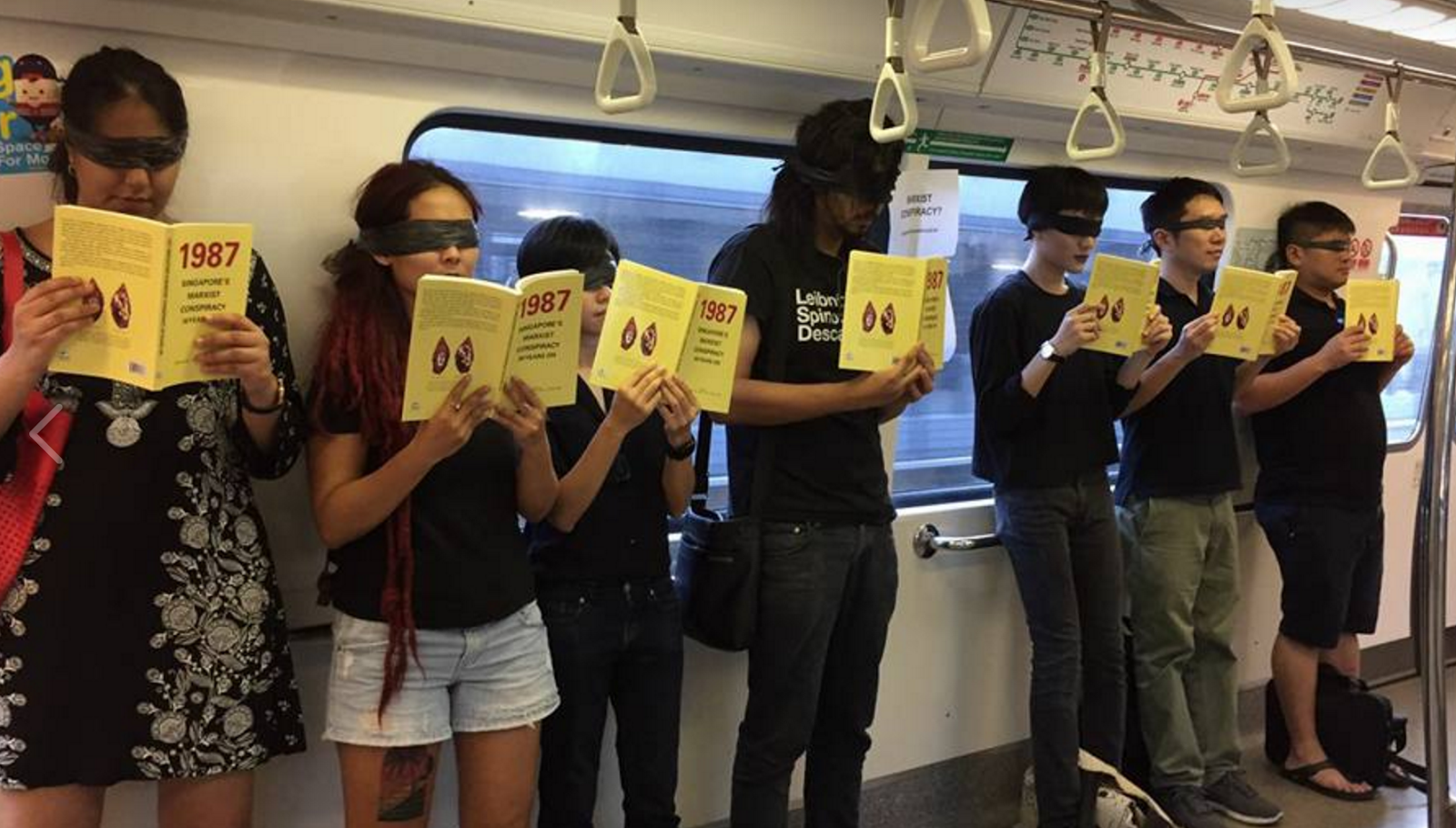
On 3 June 2017, Kirsten Han announced that her fellow activist Jolovan Wham had organised a protest in a Singapore Mass Rapid Transit train. Han reposted on her Facebook a series of photographs from Wham's personal page, showing Wham and eight others sitting blindfolded in a train carriage, holding up the recently published 1987: Singapore’s Marxist Conspiracy 30 Years On, with homemade posters stuck on the walls behind them. While Wham was tagged by Han, his collaborators and co-conspirators are instantly recognisable as activists of a certain bent in Singapore. Everyone knows who they are, but their names will not be mentioned here.


On the morning of 3 June 2017 while Kirsten Han was likely involved in the coordination of the dissemination of the news of the protest, if not the protest itself, I was attending in my personal capacity, as I note were some other members of the Community Action Network, the Singapore Heritage Society 30th anniversary lecture by Prof Kwok Kian-woon at the Singapore Management University.

I had no prior knowledge of the protest. I was not involved in its conception, deliberation, or execution. I was not invited to be part of it. If invited, I would have told them it was a stupid idea that would get them thrown in jail, whether they did it in Singapore, New York, or London.

15 May 2017

Date with High Court, Cha-cha with Cheng Bock


It was clear from Dr Tan Cheng Bock's press conference on 31 March 2017 that the good doctor would mount a challenge to the reserved presidential election to be held in Singapore before September 2017. It has been a week since Dr Tan broke the news that he had applied for "a clarification" from the High Court - an application which was accepted.

It is time for us to examine the principles that may guide the court when it makes that clarification for both Dr Tan and the Attorney-General's Chambers. We make no attempt to weigh the "correctness" of these principles or the likelihood that they will be accepted by the Court in its judgement.

24 April 2017

Beware the FAS scandal offside trap!

FIFA's 2015 reform package to improve transparency and accountability in the sport includes a call to remove government appointees from leadership of its regional and national administrative bodies. The reformation has seen a fallout in various countries, with political appointees exiting most unwillingly the national administration of their sport. In squeaky clean, corruption-free Singapore, the Football Association of Singapore (FAS) has to comply with FIFA and hold an unprecedented and contentious election for its leadership.

Following accusations of a "compulsory donation" to the FAS that was funnelled to the ASEAN Football Association (AFF), the FAS and three football clubs have been raided by Singapore's Commercial Affairs Department (CAD), the clubs' chief, the former political appointee president and his right-hand man have been called in for interviews.

Instead of reading sensationalist reportage and hack pieces attacking Bill Ng and questioning how his profitable clubs have so many jackpot machines, we invite you to try our serious analysis on the real issues surrounding this case. Clue: It has nothing to do with legalised, highly regulated, ubiquitous jackpot machines in Singapore's football clubs.

31 March 2017

Tough Questions with Tan Cheng Bock


On the morning of 31 March 2017, Dr Tan Cheng Bock held a press conference on the upcoming presidential election. During this conference, the good doctor read out the text of his media release (which is also helpfully reproduced on facebook and streamed by The Online Citizen).

As usual, we at Illusio will hold your hand and help you read between the lines.

17 October 2016

Copyfight! What happens when copyright meets official secrets?

In his judgement, the honorable Tay Yong Kwan appears to have made a Solomonic decision: the Attorney-General gets his Official Secrets Act to apply to the interview and transcripts, and the Estate of the late Mr Lee gets its full copyright to the same interview and transcripts. That is to say, the Estate has "full copyright and literary rights", only to the extent of checking that the Government complies with the Interview Agreement.

Rafael's Judgment of Solomon


13 October 2016

Memories, Official Secrets, and the National Archives: A matter of governmental judgment or archival discretion?

In the case of Lee Wei Ling and Lee Hsien Yang vs Attorney-General, the honorable Tay Yong Kwan has ruled that the transcripts of the late Mr Lee Kuan Yew's interviews with the National Archives are:
1. covered by the Official Secrets Act;
2. copyrighted by Mr Lee's estate, but only to the extent of "ensuring the Government's compliance with the Interview Agreement"; and
3. in custody of the Cabinet Secretary [our note: till 2020, when the Government may exercise the discretion to hand them over to the National Archives then, at a later date, or never, or indefinitely delay that decision].

Both the Estate and the Attorney-General appear to have disregarded the consideration and interests of the Archives itself when they argued their cases. Neither the National Archives of Singapore, any of its fellow SARBICA member associations, or even the International Council of Archives were called by either side to submit an affidavit for the case. It thus falls on us at Illusio to illustrate how an archival institution or a community of archival experts may possibly view the case. Or at least, weigh in on whether and when archival interviews should be official secrets, and who typically has copyright, and explain why.

20 September 2016

21 April 2016

New Elected Presidency for Singapore: Update, Rethink, or Clown Show?


In the matter of the changes to the elected presidency, it has taken less than 4 months from Lee Hsien Loong's proposals in his speech at the opening of the 13th parliament of Singapore for us to arrive at the constitutional commission's public hearings at the Supreme Court. And if Minilee has his way, the commission will present its findings by 2016Q3, following which the Prime Minister's Office will likely draft the changes it accepts from the commission, the bill read twice in parliament and passed "within the year", and the presidential election take place with the new rules in 2017, less than 18 months away from now.


30 November 2013

Alex Au's Cell Block Tango: "He had it coming"

As you may know, the Attorney-General's Chambers has initiated contempt of court proceedings against the blogger Alex Au. In addition, there is a statement calling the AGC to drop its case against the author of Yawning Bread, signed by prominent activists, online news journalists, academics, artists -- and other assorted poseurs.

Fair disclosure: I was approached to sign this. On a strictly professional level, I offered my services to edit an early draft of the text. On a personal level, I have not signed this statement and do not intend to.

I do not believe Alex Au's case warrants a campaign against the AGC. Nor should it galvanise Au's supporters to make hysterical, unseemly, and unhelpful comments about an "Operation Coldweb" that are sure to damage the integrity of the judicial process in the eyes of the public.

Simply put, Alex Au had it coming.


I have been blogging since 2003. Alex Au has been been writing online since 1996, back when Yawning Bread was a website and not quite a blog. Over these 10 years (and 10 years is a long time to get to know someone just from their writings alone), we know Alex Au to be, on occasion, an irresponsible, intemperate writer itching for a fight with the authorities over real or imagined slights, whipping up campaigns of manufactured outrage. And we have called him out on that time after time, over the years.

There was that time when Alex Au incited readers in a mailing list not to bother with civility or respect when dealing with the Christian Right in Singapore, and pretended he said the complete opposite when asked by the press. There was that time when Alex Au organised a Facebook campaign to boycott DBS for donating to the Focus on the Family charity. And another time when Alex Au organised a hate campaign against the National Volunteer and Philanthropic Centre (you know, the one where the good Mr Gilbert Goh's Transitioning.org has its offices!), claiming the NGO was either led by Christian fundamentalists, actually not independent at all, or financially suspect.

We could go on but I hope you get the idea. Alex Au is the sort of blogger who is reasonable and responsible on the whole, and then on occasion transforms into the poster child of the Nasty Internet that the ministers keep trotting out whenever they urge for more online regulation.

How a simple, commonplace judicial procedure that happens all the time in every other country, rescheduling court hearing dates so cases and judgements don't contradict each other, gets turned into a conspiracy theory ascribing ulterior motives to the sitting judge -- you have to really hand it to Alex Au.

So of course there is now a legal test: the case is now before the supreme court to decide whether, in this day and age, the judiciary can be scandalised, given the exact words Alex Au used in his article.


Alex Au had it coming. And I have no doubt he wanted it this way. And if the petitioners really believe that Singaporeans are mature enough to discuss judicial procedures without scandalising the court, they ought to give the court credit for being mature enough to decide that. Shouldn't they?

[Addendum, 2 December 2013: It is important to note that the Supreme court has granted the AGC leave to initiate a contempt of court suit against Alex Au. To date, the AGC has not filed the suit against Alex Au, although the proceedings began with their application for leave to the Supreme Court.

Hopefully the several people whom Alex Au claims are "keen on raising funds to help defray my costs" have not actually begun to raise funds. To do so would be most improper. For Alex Au to mention all those details about raising funds while neglecting to admit that the AGC has not yet taken action against him (and may never) despite being granted permission by the Supreme Court is typical of Alex's failings.]

18 January 2013

The PAP clown council political funding reform show

As the author of Illusio, I have only one operating principle:  the priestess of Ise never opines or offers analysis proffered elsewhere. Weeks or months after the eruption of a cause celebre, find much to say that no-one has pointed out, or an angle from which no-one has approached. It is not to keep a dead issue alive but to examine if consensus has been manufactured, a status quo hurriedly agreed upon, a veil and a gag brought down to shutter the eyes, the ears, the mind of a public unaccustomed to inquiry.

Over the last 3 posts, we have offered a thorough (though not exhaustive) analysis of the PAP-AIM town council clown show. No other blogger so far has walked you, dear Reader, step-by-step through this tangled web. It is one thing to say there is a conflict of interests; it is yet another to show you where that conflict lies, which part of it is legally actionable and which part merely unseemly, and at which point in the procurement process that conflict arose.

From a legal and procedural analysis of the PAP clown council-AIM scandal in our previous 2 posts, we ascertain that:
1. It is not in fact illegal for the PAP to own, directly or indirectly, the company AIM. It is also not illegal for AIM to be 'owned' indirectly by a different entity.
2. Both AIM and the PAP are not legally obliged to indicate to the general public the status and details of ownership. (*AIM would have to disclose this to their appointed auditors, nonetheless.)
3. As it stands, the law is silent on whether the conflict of interest between AIM and the town councils should have been reflected.

Nevetheless, Minilee has called for the Ministry of National Development to investigate fully the clown counil-AIM deal to ensure that 'trust in the system' is maintained.

Decoding Minilee, it should be apparent to Singaporean observers that for all the legalistic posturing by Teo Ho-pin, whether the clown council-AIM deal was technically legal (arguably true) or whether international standards of corporate governance had been adhered to (arguably false, see our immediate previous post), the mere fact that the clown councils engaged AIM to be a middleman to deal with the previous contractor NCS is enough to compromise trust in the system.

Perhaps people will eventually find the eloquence for their supposed disquiet and ask: Why do our laws permit a political party to financially back companies so that these companies accrue political advantage in financial dealings?

Follow the money trail

Last post, we left off with the question: What happens to the money AIM earns from its contracts with the town councils? Will the Ministry of National Development even investigate that?

In a procurement audit involving potential conflict of interests, it is a general rule to ask where the money goes. While Teo Ho-Pin is not a shareholder or director of AIM and Chandra Das and his co-owners and directors at AIM are not officials or employees of the town council, it remains that all the parties involved in the procurement deal are members of the PAP.

We have argued that Dr Teo issued a tender for a contract that was financially unfeasible and did not make business sense, and that AIM was awarded the contract on the sole merit that it was a PAP-owned or PAP-backed company. In other words, AIM accrued business advantage from its political affiliation to the extent that it could be the sole bidder, be a dormant company that had no public track record, put in a late bid. Yet it won the contract because Dr Teo, unlike most other Singaporeans, knew the political affiliation of AIM, and said that was sufficient cause to award the contract to AIM.

But what happens to the money AIM earns from its contracts with the town councils? On his part, Das acclaims that he doesn't take a single cent as salary, share dividends, or directorship fees from his position in AIM. That is curious until we read PAP's party constitution, which states in Article X:
No member shall except for professional services rendered at the request of the Central Executive Committee, receive any profit, salary or emolument from the funds or transactions of the Party.
We hypothesise that as party members who are shareholders and directors of a company backed by a letter of guarantee by the PAP, Das and his party colleagues, former and present shareholders and directors likewise, are subject to this stipulation.

But where does the money go to then? Who does it belong to? Does it sit forever in Action Information Management in trust of the People's Action Party? Or does it go eventually to the People's Action Party?

Note that if the earnings of AIM go back to the PAP, then it may be argued that it is Teo who has committed a legally actionable conflict of interest. By awarding the contract to AIM, which he knows to be PAP-backed, he has made it possible for AIM's income deriving from the contract to be transferred to the PAP (of which he, Das, and the AIM shareholders and directors are members), thereby awarding financial advantage from the deal ultimately to the PAP and its members.

Political financing reform drastically needed

A reading of the Political Donations Act affirms the extensive strictures limiting donations to political parties. There are limits to how much money a political party may receive from companies and other organisations, the nature of companies. Parties are required to account to minute detail the donations they receive each year.


Yet as the PAP clown council-AIM affair illustrates, there are sufficient loopholes in the laws of Singapore to allow political parties to 'own' private companies indirectly, and the incomes derived from these are, as a result of lacunae and silences in the law, not subject to scrutiny. Further, we now know that as written, the laws do not require political parties to declare even if they do indeed own indirectly private businesses, much less clarify on the legality of such arrangements.

To regain public trust in the system, a relook at political financing regulations needs to be performed. We believe that the Ministry of National Development does not possess the mandate and has not been tasked to examine this particular issue.

I suggest interested readers do their own research on the international legal norms concerning political ownership of private corporations.

The clown council-AIM affair is not a purely administrative matter; the conflict of interests ultimately rests on whether undue political advantage was accrued by AIM and whether undue financial advantage was accrued by the PAP. If this were illegal in the eyes of the law, it stands that there can be no damage to the people's trust in the system. The damage to the people's trust in the system stems from the possibility that such conflicts of interests are apparently not illegal as the law currently stands.

Hence, I call upon the president of Singapore to convene an independent board of inquiry chaired by the Auditor-general of Singapore and the Registrar of Societies to investigate the issue, and not the MND. Only these two regulators may request for a full and public account from the PAP of all private enterprises it directly owns or indirectly backs and the incomes derived thereof, and to ensure that these incomes are indeed reflected in the accounts of the PAP, and do comply with the Political Donations Act, (I)(3).

With the surprise revelation of AIM's ties to the PAP, the PAP's refusal to disclose whether it owns other companies, and AIM's refusal to disclose the details of other financial dealings it may have had in the past, it appears there is a legal loophole for a political party to own, however indirectly, private enterprises without traditional transparency and accountability mandated elsewhere in the law. Several lacunae in the law have coalesced such that these standards of transparency appear suspended when it comes to the very special case of political financing, where a party owns private enterprises.

Singapore's elected parliamentarians and other politicians must take this issue seriously and urge for a new Political Financing Bill that will clarify these blind spots currently existing in the law, and to harmonise Singapore's political financing regulations to internationally-accepted norms.